In addition to being made by Lelo and therefore being sleek, elegant, and gorgeous simply by design, Mia is also the first sex toy of her kind, a high-end rechargeable sex toy that is powered by your computer alone! You heard me. Mia charges via USB port and dubbed by Lelo to be “a lipstick vibrator for the iPod generation.” If the sheer geek factor of that alone doesn’t already have you desiring one, let me tell you a little more about her.
Mia, much like her big sister Nea, is small and discreet and made of PC-ABS (Polycarbonate-Acrylonitrile/butadiene/styrene blend) which is a phthalate-free thermoplastic and completely safe to use.
She looks like a slightly oversized tube of lipstick or a round slightly long thumb-drive, so having her out in public or someone else coming upon her in your handbag wouldn’t be a problem. She is just barely over four inches long and not meant for insertion, though a couple inches of her could be if desired.
The vibrations course through the entirety of her, so both ends can be used for stimulation. One end tapers into a rounded point for small accurate pressure; the other side, the lid, is sloped flat and wide for a greater surface of vibration. Both ends are fantastic for clitoral (or perineum) stimulation.
Like all Lelo vibes, Mia has multiple speeds and pulsation modes, all accessed by the + / – controls on her. Simply press the plus and on she turns, revving up to a nice strong vibration that always gets me off quickly. Once she is turned on to her highest pressing the plus again will cycle through her other modes of vibration, three pulses of varying speeds, then the minus button to get back to continuous vibration. She can also be locked by pressing the plus and minus together until the LED light comes on and stays on, handy so her charge doesn’t run out while bouncing around in a bag.
She comes with an elegant black storage box, a satin bag to carry her around in should you so desire, a manual, a 1-year warranty (comes standard with all Lelo toys), and an extension USB cord. I’ve also found she works with a wall-charger I have for my iPod, as the iPod charger uses a USB connection from the iPod to the charger, which can easily be substituted by the Mia.
Another perk of being able to charge her via USB is that, unless you are unable to access a computer (and in this day and age that is difficult to do), you will never not be able to charge her. Rechargeable toys are wonderful, but they also mean more cords to keep track of, and with Mia all you need is a computer. Any computer.
In addition to the geek factor, her elegant, sleek, and easily accessible size has turned Mia into a favorite of mine. Like her sister Nea I have gotten into the habit of taking her with me wherever I go, just in case I might need her. One of these days I’m going to charge her up on a public (library?) computer and then go into the bathroom and use her, or something equally as scandalous.
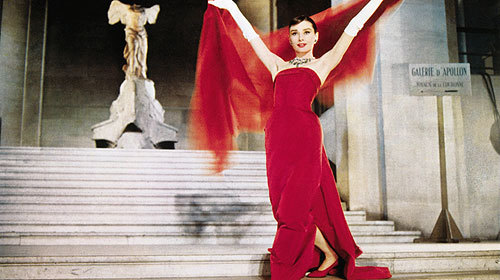
I have a secret (or not so secret?) love of old 50s and 60s movies with Audrey Hepburn, Marilyn Monroe, Cary Grant, Fred Astaire, and so on. As much as I adore genderfucky practice there is something so lovely about watching Audrey Hepburn and Fred Astaire sing and dance in fabulous clothing (which happens to be what is on the television as I write this), or any of the various other very hetero very gender normative pairings that are mainstream movies from that era.
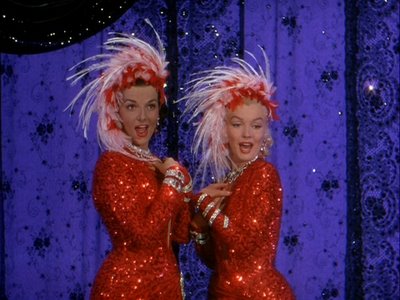
Why are some of my ‘comfort movies’ classics like Gentlemen Prefer Blondes? With winning exchanges like “I can be smart when I want to, but most men don’t like it, except Gus.” “No, that much of a fool he isn’t.”
Granted, there are a few gender bending movies like Some Like It Hot and strong female characters in other movies as well, though inevitably they always end up wrong somehow and the men end up right. In Some Like It Hot there are some wonderfully amusing and genderfucking moments, though they happen on the part of Daphne/Gerald who is willing to dress up as a woman from the beginning, unlike Joe/sephine who only agrees to it after they witness a mob mass-murder.
Though I didn’t used to when I was younger, I now recognize the inherent sexism within most of these films, and instead of being upset about it I shrug and think “that’s the way it was.” I think that is necessary in some ways, however, since there’s no use getting mad over something that happened 50 years ago, and if the same themes or lines were in movies today I would definitely be upset about it. However, my complacency about the sexism and stereotypes portrayed is a little disturbing to me all the same.
Is my recognizing the inherent sexism the most important part of the equation? I can’t help but love movies from that era, partially because they have been my comfort movies for over ten years. It’s always nice to watch a movie with a happy ending, and these usually have them. While as I mentioned above there are usually some strong characters in the movies they are often somehow wrong or proved wrong throughout the course of the movie or they are not seen as sexual or love objects, such as the magazine owner in Funny Face who is obsessed with her career and says that she has no room for love.
I think part of my love of these movies, aside from the happy endings, is the fabulous clothes, hair, and make-up all the female leads always have. Even when they are “broke” as in How to Marry a Millionare or Some Like It Hot they are still femmed up to the nines with elegant dresses, furs, sequens, gorgeous shoes, perfect hair, etc. The men, as well, are elegantly dressed: suits and ties, fedoras, sleek and gorgeous clothing. The femme in me revels in the wonderful hair and makeup.
I’ve always loved the style of these movies, the classicly glamorous look that the starlets represent, the pin-up look that never seems to go completely out of style. I love that the women in the films are actually women-sized, as opposed to the stick figures we mostly see today. Lately I have been wanting to cut my hair, get some rollers, and start wearing it like a redheaded Marilyn Monroe.
In the end, I think what is really important is that we recobnize the sexism in these films when we watch them now, since they were made in times that were trying to portray heterosexist and gender normative ideas as the norm (not to say we don’t still have that now). We all know that the 50s and 60s were trying to portray an image of perfection and normalcy that is basically unattainable, and wasn’t attained even then, although people strived for it. The movies of that era are equally unattainable, like fairy tales or romance novels (minus the smut), but they sure are fun to watch.
Marilyn Monroe and Jane Russell in Gentlemen Prefer Blondes
Though I did write about the election, I have been meaning to talk about Proposition 8 in California. I attended the rally to protest the LDS church’s involvement in Prop 8 here in Salt Lake City last Friday, we met up by the LDS Temple and marched around it. I do believe that this has been a great catalyst for the queer rights movement lately, and I also think that marriage is just one small aspect of what we need to be focusing on, but having one goal to rally around does help organize a movement.
I saw this last night, as I have become an avid watcher of Keith Olbermann and Rachel Maddow (conveniently on right after another) in the last few months, originally because of the election but now I seem to have become a bit of a liberal political media junkie (not hugely, but a little). This has been popping up all over today, and it’s something that touched me strongly enough that I would like to share with you. He makes some of the best, strongest, and most organized points against Prop 8 that I’ve seen on TV, because it is a personal rights issue and a love issue not a religious issue.
Finally tonight as promised, a Special Comment on the passage, last week, of Proposition Eight in California, which rescinded the right of same-sex couples to marry, and tilted the balance on this issue, from coast to coast.
Some parameters, as preface. This isn’t about yelling, and this isn’t about politics, and this isn’t really just about Prop-8. And I don’t have a personal investment in this: I’m not gay, I had to strain to think of one member of even my very extended family who is, I have no personal stories of close friends or colleagues fighting the prejudice that still pervades their lives.
And yet to me this vote is horrible. Horrible. Because this isn’t about yelling, and this isn’t about politics. This is about the human heart, and if that sounds corny, so be it.
If you voted for this Proposition or support those who did or the sentiment they expressed, I have some questions, because, truly, I do not understand. Why does this matter to you? What is it to you? In a time of impermanence and fly-by-night relationships, these people over here want the same chance at permanence and happiness that is your option. They don’t want to deny you yours. They don’t want to take anything away from you. They want what you want—a chance to be a little less alone in the world.
Only now you are saying to them—no. You can’t have it on these terms. Maybe something similar. If they behave. If they don’t cause too much trouble. You’ll even give them all the same legal rights—even as you’re taking away the legal right, which they already had. A world around them, still anchored in love and marriage, and you are saying, no, you can’t marry. What if somebody passed a law that said you couldn’t marry?
I keep hearing this term “re-defining” marriage. If this country hadn’t re-defined marriage, black people still couldn’t marry white people. Sixteen states had laws on the books which made that illegal in 1967. 1967.
The parents of the President-Elect of the United States couldn’t have married in nearly one third of the states of the country their son grew up to lead. But it’s worse than that. If this country had not “re-defined” marriage, some black people still couldn’t marry black people. It is one of the most overlooked and cruelest parts of our sad story of slavery. Marriages were not legally recognized, if the people were slaves. Since slaves were property, they could not legally be husband and wife, or mother and child. Their marriage vows were different: not “Until Death, Do You Part,” but “Until Death or Distance, Do You Part.” Marriages among slaves were not legally recognized.
You know, just like marriages today in California are not legally recognized, if the people are gay.
And uncountable in our history are the number of men and women, forced by society into marrying the opposite sex, in sham marriages, or marriages of convenience, or just marriages of not knowing, centuries of men and women who have lived their lives in shame and unhappiness, and who have, through a lie to themselves or others, broken countless other lives, of spouses and children, all because we said a man couldn’t marry another man, or a woman couldn’t marry another woman. The sanctity of marriage.
How many marriages like that have there been and how on earth do they increase the “sanctity” of marriage rather than render the term, meaningless?
What is this, to you? Nobody is asking you to embrace their expression of love. But don’t you, as human beings, have to embrace… that love? The world is barren enough.
It is stacked against love, and against hope, and against those very few and precious emotions that enable us to go forward. Your marriage only stands a 50-50 chance of lasting, no matter how much you feel and how hard you work.
And here are people overjoyed at the prospect of just that chance, and that work, just for the hope of having that feeling. With so much hate in the world, with so much meaningless division, and people pitted against people for no good reason, this is what your religion tells you to do? With your experience of life and this world and all its sadnesses, this is what your conscience tells you to do?
With your knowledge that life, with endless vigor, seems to tilt the playing field on which we all live, in favor of unhappiness and hate… this is what your heart tells you to do? You want to sanctify marriage? You want to honor your God and the universal love you believe he represents? Then Spread happiness—this tiny, symbolic, semantical grain of happiness—share it with all those who seek it. Quote me anything from your religious leader or book of choice telling you to stand against this. And then tell me how you can believe both that statement and another statement, another one which reads only “do unto others as you would have them do unto you.”
You are asked now, by your country, and perhaps by your creator, to stand on one side or another. You are asked now to stand, not on a question of politics, not on a question of religion, not on a question of gay or straight. You are asked now to stand, on a question of love. All you need do is stand, and let the tiny ember of love meet its own fate.
You don’t have to help it, you don’t have it applaud it, you don’t have to fight for it. Just don’t put it out. Just don’t extinguish it. Because while it may at first look like that love is between two people you don’t know and you don’t understand and maybe you don’t even want to know. It is, in fact, the ember of your love, for your fellow person just because this is the only world we have. And the other guy counts, too.
This is the second time in ten days I find myself concluding by turning to, of all things, the closing plea for mercy by Clarence Darrow in a murder trial.
But what he said, fits what is really at the heart of this:
“I was reading last night of the aspiration of the old Persian poet, Omar-Khayyam,” he told the judge. It appealed to me as the highest that I can vision. I wish it was in my heart, and I wish it was in the hearts of all: So I be written in the Book of Love; I do not care about that Book above. Erase my name, or write it as you will, So I be written in the Book of Love.